
Highlights
- Late-summer evenings bring some of the most recognizable sounds of the season.
- Much of the nighttime chorus comes from insects communicating right in your own backyard.
- A yard that gets lively after dark may simply be supporting some of the wildlife that lives nearby.
- Slowing down to listen adds another dimension to enjoying your lawn and landscape before summer slips away.
The sounds of August in your yard can be surprisingly loud once the sun goes down.
A peaceful summer evening can quickly fill with chirps, buzzes, trills, and calls coming from the landscape around you.
It’s a soundtrack we tend to take for granted. But listen a little more closely and you may start to recognize who’s taking the daytime shift, who waits until dusk, and who keeps things going well into the night.
Some of the culprits may surprise you. Let’s take a closer look at the creatures behind those unmistakable sounds of August in your yard.
1. Crickets provide the soundtrack of August.
If there’s one sound that says late summer, it’s probably the steady chirp of a cricket.
Male crickets produce their familiar calls by rubbing parts of their wings together to attract females. Different species have different calling patterns, which helps explain why an August evening can seem to have several rhythms going at once.
Temperature plays a role, too. Because crickets are cold-blooded, their chirping speeds up as the air gets warmer and slows as it cools. In fact, the University of Maryland Extension notes that their chirps can even be used to estimate how warm it is outside.
By August, most crickets have reached adulthood, which is why their familiar chirping becomes such a noticeable part of late-summer evenings.
2. Katydids can turn up the volume considerably.
That persistent racket coming from the trees may not be a cricket at all.
Katydids are another familiar part of late-summer evenings, but they can be harder to spot. They typically spend their time among the leaves of shrubs and trees, so their green coloring and higher perch keep them hidden even when their calls are impossible to miss.
Like crickets, katydids produce their calls by rubbing parts of their wings together. But depending on the species, the result may be a buzz, trill, rasp, or series of short pulses. And when they get together on a warm August evening, the effect can be surprisingly intense.
3. Cicadas make themselves known before sunset.
Not everything in the August soundtrack waits until dark.
If you hear intense buzzing or droning on a hot summer day, it’s probably coming from annual cicadas. Unlike crickets and katydids, male cicadas produce their calls using specialized structures on their bodies rather than rubbing their wings together.
Their calls can travel a considerable distance, making it difficult to tell exactly where they’re coming from. As evening approaches, cicadas generally begin to quiet down, just as many of their nighttime neighbors become more active.
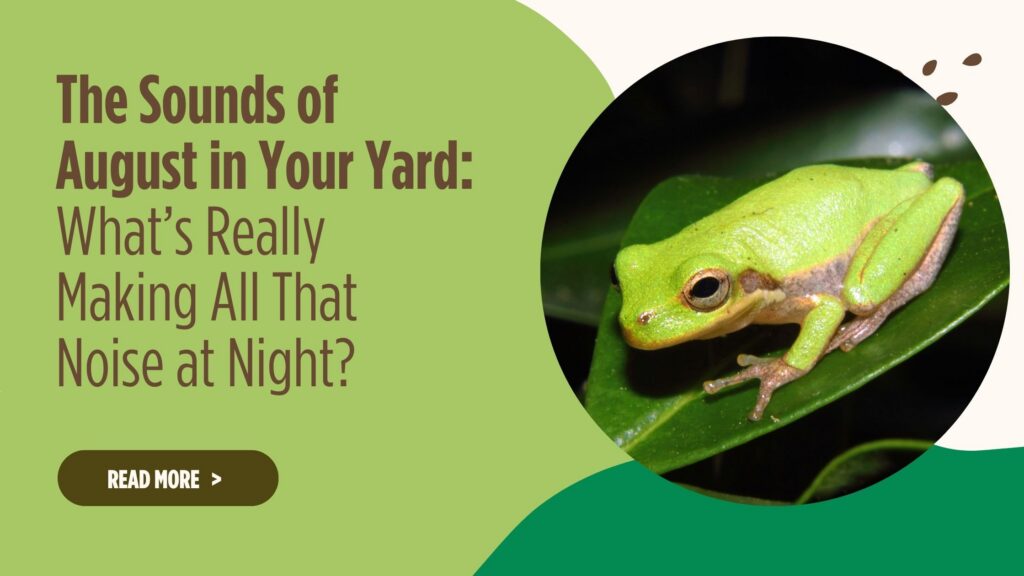
4. Frogs add their voices after dark.
If there’s a pond, stream, wetland, or other damp area nearby, frogs and toads may be contributing to the evening soundtrack even if you never see them in your yard.
Each species has its own distinctive call, ranging from short chirps to the deep croaks most of us associate with frogs. Their calls can travel from nearby woods and water, making them a familiar part of warm, humid August evenings.
And these nighttime callers aren’t just providing background music. Frogs and toads feed on insects and other small creatures, making them beneficial members of the backyard ecosystem. They often stay hidden during the day, so their calls after dark may be the only clue that they’re nearby.
5. While you’re listening, look for lightning bugs.
They may not contribute anything to the nighttime soundtrack, but lightning bugs are another unmistakable part of a late-summer evening in the Mid-Atlantic.
Those familiar flashes of light are actually a form of communication. Adult lightning bugs use their glow to find and attract mates, with different species producing their own flash patterns.
There’s a lot happening below the surface, too. Lightning bug larvae spend much of their lives on or near the ground, where they feed on slugs, snails, worms, and other small organisms. Lawns, garden beds, leaf litter, and other moist areas can all provide habitat during different stages of their lives.
So while crickets, katydids, cicadas, and frogs provide the soundtrack, lightning bugs give August evenings a light show of their own.
At Hillside Lawn Service, we spend a lot of time thinking about what makes outdoor spaces healthy, beautiful, and resilient. But a great lawn is about more than how it looks. It’s a place to unwind after dinner, watch the lightning bugs, or simply sit outside and enjoy a summer evening.
So, the next time you step outside after sunset, take time to listen and enjoy your surroundings. The sounds of August in your yard won’t be around forever. Soon, the soundtrack will change right along with the season.
FAQ
1. Why does my backyard seem louder in late summer?
Many insects reach maturity by late summer, and warm temperatures bring increased activity. Several species may also be active at the same time, making August evenings especially lively.
2. Is all that nighttime activity a sign of a problem in my yard?
Usually, no. Crickets, katydids, lightning bugs, frogs, and other seasonal visitors are a normal part of the outdoor environment. However, noticeable lawn damage or an unusual increase in a particular pest may be worth investigating.
3. Where do all these insects go during the day?
Many stay tucked away in grass, trees, shrubs, garden beds, leaf litter, and other sheltered areas until conditions are right for them to become active.
4. Why do some yards have more wildlife activity than others?
Every property is different. Trees, shrubs, garden beds, grassy areas, nearby water sources, and natural spaces can all influence the insects and other small creatures you see and hear throughout the season.
5. Will the nighttime sounds continue into fall?
Not at the same level. As temperatures cool and the seasons change, insect activity begins to slow and the familiar late-summer soundtrack gradually fades.
Want to enjoy more time outdoors? From chirping crickets to flashing lightning bugs, August evenings are meant to be spent outside. Hillside Lawn Service helps homeowners throughout Maryland, Delaware, and Southern Pennsylvania keep their lawns healthy and beautiful. Contact us today at 410.399.2207 or visit Hillsidelawn.com to get started.
About HillSide Lawn Service: Since 1994, HillSide Lawn Service has offered expert lawn care, including aeration and overseeding and tree and shrub care. With a focus on sustainable, science-based methods and personalized service, HillSide is the trusted source for creating green, healthy lawns throughout Maryland, Delaware and parts of Pennsylvania. For more information or to request a free estimate, visit www.hillsidelawn.com or call 410-399-2207.