
Highlights
- Crabgrass is a fast-growing annual weed that spreads quickly in thin or stressed turf.
- It thrives in the Mid-Atlantic’s heat, humidity, and compacted soils.
- Each plant can produce thousands of seeds, fueling future growth.
- Early spring prevention is far more effective than later treatment.
- Proper mowing, watering, and soil care reduce the risk of invasion.
- Dense, healthy turf naturally crowds out unwanted growth.
Crabgrass is one of the most persistent lawn weeds in the Mid-Atlantic, capable of spreading quickly when conditions are right.
What makes it especially frustrating is how easily it takes hold in weak areas of a lawn, often before it becomes obvious.
In regions like Maryland, Delaware, and parts of Pennsylvania, fluctuating spring conditions followed by hot, humid summers create an environment where crabgrass can thrive. Once it appears, it spreads outward, competes with healthy turf, and often returns year after year if not addressed early.
Understanding how crabgrass develops, spreads, and responds to different treatments is the first step toward effective control. Read on for seven things every homeowner should know.
1. It often starts in areas where turf is already under stress
Most infestations do not begin across an entire lawn. Instead, they show up in isolated areas where grass is thinner or struggling.
Bare spots along driveways, compacted soil from regular use, or sections impacted by drought or disease all create opportunities for growth to establish. Seasonal transitions in the Mid-Atlantic can further weaken turf, making these areas more vulnerable.
Once established, it can gradually expand into surrounding sections if conditions remain favorable.
2. Growth accelerates as temperatures rise.
Cool-season grasses common in this region tend to slow down during peak summer heat. At the same time, crabgrass becomes more active.
Warmer temperatures allow it to grow quickly and spread outward in low, dense patches. As it expands, it competes with surrounding turf for sunlight, moisture, and nutrients, often becoming more visible by mid-summer.
3. A single season can lead to ongoing issues.
Even though plants die off at the end of the growing season, the impact can carry over into the next year.
Each plant produces a large number of seeds before it disappears in the fall. Those seeds settle into the soil and remain dormant through winter, ready to germinate when temperatures rise again in spring.
This cycle is what makes long-term crabgrass control so important.
4. Mid-Atlantic conditions naturally support its development.
Soil temperature plays a key role in when growth begins. Once temperatures consistently reach the mid-50s, early germination can occur.
According to the University of Maryland Extension, crabgrass begins to germinate when soil temperatures are sustained around 53–55°F for several days. (Source: University of Maryland Extension, Crabgrass)
Warm soil, moisture, and seasonal humidity all contribute to how quickly it spreads across Mid-Atlantic lawns.
5. Prevention is more effective than trying to remove it later.
Many homeowners ask how to get rid of crabgrass once they see it, but by that point, options are more limited.
Preemergence herbicides for crabgrass, often referred to as a crabgrass preventer, are designed to stop seeds before they begin to grow. These treatments are most effective when applied in early spring, before germination begins.
Proper timing is key. Applying too late can significantly reduce results.
6. Lawn care habits influence how much it spreads.
Routine maintenance plays a bigger role than many homeowners realize.
Mowing too short can weaken turf and expose soil, making it easier for weeds to take hold. Maintaining the proper mowing height helps shade the soil and reduce germination.
Watering also matters. Deep, consistent watering supports stronger root systems, while shallow watering can encourage growth near the surface.
7. A thicker lawn makes it harder for weeds to take hold.
Healthy lawns naturally resist invasion. When turf grows densely, it limits the space and resources available for weeds to establish.
Aeration, overseeding, and proper fertilization all support stronger growth. Over time, these practices reduce the need for reactive treatments and support long-term lawn health.
Frequently Asked Questions
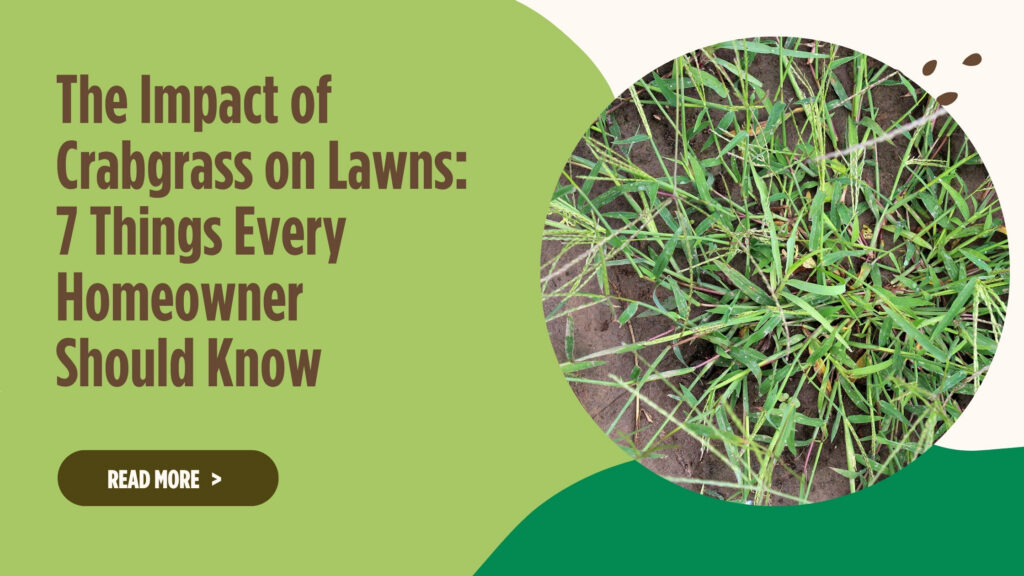
1. What does crabgrass look like when it first appears?
It typically starts as light green patches that grow low to the ground and spread outward. As it matures, it forms wider clumps that become more noticeable during the summer.
2. Why does it keep coming back each year?
Crabgrass returns because of the seeds left behind in the soil. Even after plants die in the fall, thousands of seeds can remain and germinate the following spring.
3. When should crabgrass be treated in the Mid-Atlantic?
The best time for crabgrass control in this region is early spring, before seeds begin to germinate. This is when preemergence herbicides for crabgrass are most effective.
4. Is it possible to get rid of crabgrass once it appears?
Post-emergent treatments can help reduce visible patches. However, results are often less consistent than preventative applications.
5. What’s the best way to kill crabgrass and prevent it from returning?
The most effective approach combines early prevention with strong lawn care practices. Using a crabgrass preventer in spring, along with proper mowing, watering, and fertilization, helps reduce future growth.
Crabgrass can move quickly, but with the right timing and a proactive approach, it can be managed effectively. Taking action early and maintaining consistent care can help keep your lawn thick, healthy, and better protected throughout the season.
Want to get ahead of crabgrass this season? Contact us today at 410.399.2207 or visit Hillsidelawn.com for a professional evaluation and a customized treatment plan tailored to Mid-Atlantic conditions.
About HillSide Lawn Service: Since 1994, HillSide Lawn Service has offered expert lawn care, including aeration and overseeding and tree and shrub care. With a focus on sustainable, science-based methods and personalized service, HillSide is the trusted source for creating green, healthy lawns throughout Maryland, Delaware and parts of Pennsylvania. For more information or to request a free estimate, visit www.hillsidelawn.com or call 410-399-2207.