
Highlights
- Brown patches in the grass aren’t always caused by underground pests.
- Healthy turf can often recover from minor root damage without aggressive treatment.
- Timing plays a major role in how well lawn treatments perform.
- Overapplying lawn products may create unnecessary stress on soil health.
- Strong roots and healthy soil help lawns handle seasonal stress more effectively.
Misconceptions about grub control can lead homeowners to apply treatments unnecessarily, use products at the wrong time, or assume every brown patch points to underground pest damage.
While grub damage is common in Mid-Atlantic lawns, several other lawn issues can create similar symptoms. Understanding what’s actually happening beneath the surface can help homeowners identify problems more accurately and choose the right approach for long-term lawn health.
Read on to explore seven common myths homeowners often believe about grub control and lawn care.
Misconception #1: Damaged turf always points to grubs.
In reality, drought stress, fungal disease, compacted soil, pet damage, and irrigation problems can all create similar symptoms.
Grub damage often causes turf to feel loose or spongy because the roots have been weakened below the surface. Other signs include increased digging from birds, raccoons, or skunks searching for food in affected areas.
Because several lawn problems can look alike at first, proper diagnosis is important before applying any treatment.
Misconception #2: Any sign of grubs requires immediate action.
That isn’t always the case. Some grub activity is common in healthy lawns, and a small number of grubs in one area may not cause noticeable damage. Problems typically develop when grub populations become concentrated enough to heavily feed on grassroots. Healthy turf with strong roots can often tolerate minor feeding without major visible stress.
That’s why professional lawn care programs focus on monitoring lawn conditions and identifying damaging population levels rather than treating every isolated issue.
Misconception #3: All grub control treatments are essentially the same.
In reality, these treatments work in a variety of ways. Preventive applications are designed to target immature grubs before they begin causing more serious root damage later in the season. Curative treatments, meanwhile, are intended for active infestations that are already affecting the lawn.
The University of Maryland Extension notes that treatment timing plays an important role because different products target different stages of grub development. In addition, soil temperatures, seasonal timing, and weather conditions all influence how well treatments perform.
Misconception #4: More product means better protection.
Overlapping products can create unnecessary environmental impact while also affecting beneficial organisms that support healthy soil and turf growth.
Targeted applications based on actual lawn conditions are usually far more effective than routine over-treatment. Strong lawn care programs focus on precision, monitoring, and long-term turf health rather than simply applying more product.
Misconception #5: Japanese beetles and grub problems are unrelated.
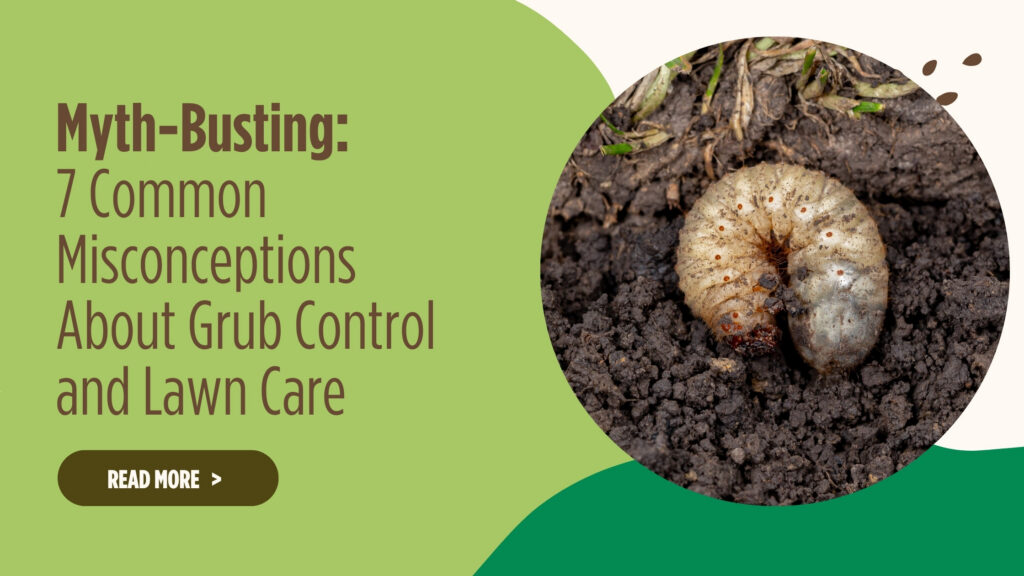
Many homeowners don’t realize that Japanese beetles and grubs are connected stages of the same lifecycle.
Adult Japanese beetles lay eggs in the soil during summer. Those eggs later hatch into larvae that feed on grassroots beneath the lawn surface.
If beetle activity becomes especially noticeable around landscaping, gardens, or ornamental plants, it may also signal future issues developing in the lawn itself.
Misconception #6: Grub control alone will solve the problem.
Treating grubs is only one piece of maintaining a healthy lawn.
If the soil is compacted, drainage is poor, or the turf is already stressed from heat or drought, lawn problems may continue even after treatment. Strong lawns rely on a combination of healthy soil, proper watering, aeration, fertilization, and seasonal care.
In other words, effective grub control works best as part of a broader lawn care strategy, not as a standalone fix.
Misconception #7: DIY treatments are good enough.
These products can sometimes help with mild lawn problems, but they aren’t always effective for larger infestations or recurring damage.
Application timing, watering requirements, product selection, and changing Mid-Atlantic weather patterns all affect results. An experienced lawn care provider can help determine:
- Whether grubs are really the issue
- If treatment is necessary
- Which approach will be most effective
- When applications should occur
Many misconceptions about grub control come from outdated advice or one-size-fits-all recommendations. The reality is that successful prevention depends on proper timing, healthy soil, accurate diagnosis, and consistent lawn care practices.
FAQs
1. What causes brown patches besides grubs?
Brown patches can develop from drought stress, fungal disease, pet damage, poor drainage, compacted soil, or irrigation problems. While underground pests can certainly damage lawns, several common lawn issues create similar symptoms.
2. Can healthy lawns tolerate some underground grub feeding?
Yes. Strong turf with healthy roots can often recover from limited root damage without severe visible stress. Proper lawn maintenance helps grass handle seasonal challenges more effectively.
3. Why does treatment timing matter so much?
Different products target different stages of development. Preventive applications work earlier in the season, while curative treatments target active infestations already damaging the lawn.
4. Do Japanese beetles mean lawn problems are coming?
They can. Japanese beetles lay eggs in the soil during summer, which later hatch beneath the lawn surface. Heavy beetle activity may indicate future turf pressure.
5. Can too much lawn treatment create problems?
Yes. Overapplying products may affect beneficial organisms, soil balance, and overall turf health. A targeted treatment plan based on actual lawn conditions is usually more effective.
Concerned about grub damage or thinning grass? HillSide’s lawn care professionals can assess your lawn, identify the cause of the damage, and recommend the right treatment plan for long-term turf health. Learn more about our grub control services or contact us today at 410.399.2207 or HillSideLawn.com to schedule your free evaluation.
About HillSide Lawn Service: Since 1994, HillSide Lawn Service has offered expert lawn care, including aeration and overseeding and tree and shrub care. With a focus on sustainable, science-based methods and personalized service, HillSide is the trusted source for creating green, healthy lawns throughout Maryland, Delaware and parts of Pennsylvania. For more information or to request a free estimate, visit www.hillsidelawn.com or call 410-399-2207.