
Highlights
- Excess moisture and warming temperatures can trigger a variety of lawn health challenges.
- Early signs of fungal disease or insect feeding damage are easier to manage when addressed before they spread.
- Healthy mowing, watering, and lawn care practices can help reduce the risk of disease and support recovery.
- Knowing the difference between pests, fungus, and seasonal stress can help homeowners avoid unnecessary guesswork.
Early summer pests aren’t the only things showing up in Mid-Atlantic lawns right now.
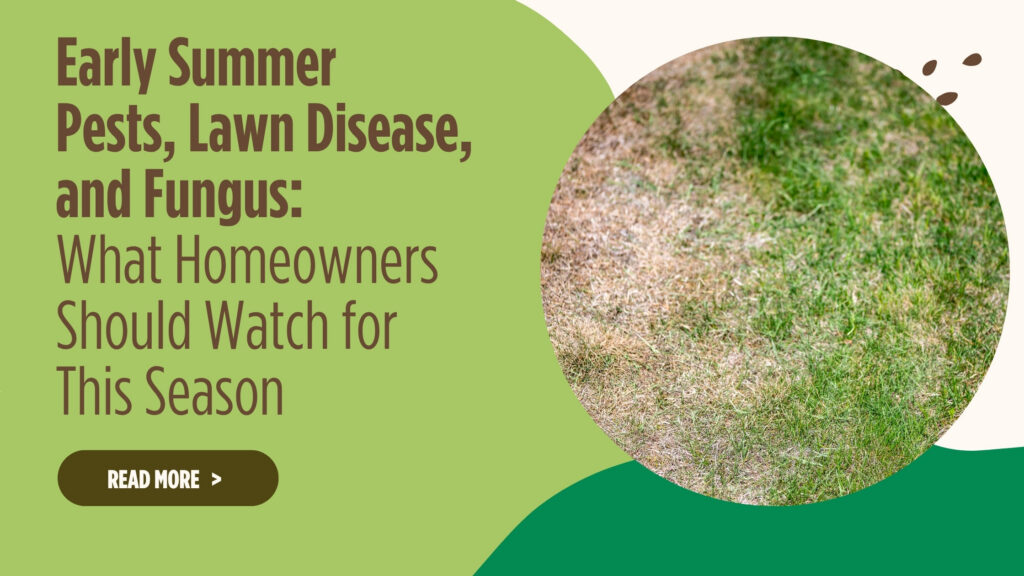
After weeks of changing weather patterns that included cool stretches, heavy rain, humidity, and rising temperatures, many area homeowners are seeing odd patches, discoloration, thinning turf, or signs of insect activity. This time of year is often when underlying lawn problems begin to reveal themselves.
What makes it so tricky? Lawn disease, fungus, pests, and normal weather stress can look surprisingly similar. Here are five things to watch for this season.
1. Heavy rain and humidity create ideal conditions for lawn fungus.
When lawns stay damp for extended periods, fungal activity often becomes more noticeable.
One common example in this region is red thread, which can appear as pinkish or reddish patches, sometimes accompanied by thin, thread-like fibers on grass blades. University of Maryland Extension identifies red thread, brown patch, dollar spot, and leaf spot among the most common diseases affecting Maryland home lawns, especially during warm, humid stretches.
Fortunately, many lawn fungus issues are more cosmetic than catastrophic. That’s not to say they should be ignored, but it isn’t necessarily cause for panic, either. Weather, moisture levels, turf health, and growing conditions all influence how disease develops and how well lawns recover.
2. Insect activity increases as summer settles in.
Depending on the timing and conditions, grubs, beetles, worms, scale insects, and other pests may become more active in lawns and ornamental plantings.
The resulting symptoms can vary. Some lawns develop thinning areas or irregular patches. Others may show chewed blades, weakened turf, or spots that seem slow to bounce back after mowing or rainfall.
Insect damage and lawn disease aren’t always obvious. That’s one reason accurate diagnosis matters. Fungus, pests, compacted soil, poor drainage, nutrient issues, and seasonal stress can sometimes produce similar-looking symptoms.
3. Good habits matter more than most people realize.
When lawn conditions get complicated, it’s tempting to look for a quick fix. Often, healthy mowing, watering, and maintenance habits are the foundation of a stronger, more resilient turf.
A few helpful reminders for Mid-Atlantic lawns:
- Water deeply and less frequently rather than applying light daily watering.
- Water early in the morning so grass blades have time to dry.
- Avoid mowing too short during hot, stressful weather.
- Support healthy soil conditions and proper drainage.
- Use balanced fertilization practices that encourage steady, healthy growth.
These steps aren’t magic, and they won’t eliminate every fungus issue or pest problem overnight. But they can help reduce lawn stress and create conditions that support stronger turf.
4. Fungicide treatment can be an important part of disease control.
When lawn disease is present, fungicide treatment can play an important role in limiting damage and helping turf recover. Certain diseases, particularly during periods of prolonged moisture, humidity, or heat stress, often respond best when fungicides are combined with sound lawn care practices.
The key is proper diagnosis. Not every patchy, discolored, or thinning area is caused by fungus. Insect activity, drought stress, soil issues, and other lawn problems can sometimes produce similar symptoms.
Understanding the underlying cause helps ensure the right solution is applied at the right time. A trained eye can distinguish between disease, insect damage, and environmental stress, helping homeowners avoid unnecessary treatments while addressing problems before they become more severe.
5. Lawn conditions change quickly in early summer.
This time of year can be tough on turf. Weather shifts from cool and wet to warm and humid. Grass is growing rapidly, insects become more active, and disease issues may become more noticeable. That combination is precisely why ongoing monitoring matters.
At HillSide Lawn Service, we keep a close watch on changing lawn conditions across our Mid-Atlantic service area so you don’t have to be a turf disease expert or bug detective.
FAQs
1. What early summer pests should homeowners watch for in the Mid-Atlantic?
Common early summer concerns may include grubs, beetles, worms, scale insects, and other pests that affect turfgrass or landscape plants. Activity levels often shift with weather conditions and seasonal timing.
2. Why does my lawn suddenly have pink, brown, or patchy areas?
Discoloration can have several causes, including lawn fungus, insect activity, nutrient issues, drainage problems, or seasonal stress related to heat and moisture.
3. Does lawn fungus always require fungicide treatment?
Not necessarily. Some fungal issues are mild or primarily cosmetic. In many cases, improving lawn care practices and reducing stress factors can support recovery.
4. How can I tell the difference between lawn disease and insect damage?
The symptoms can overlap. Patchy turf, discoloration, thinning grass, or weak growth may point to several different causes. Proper diagnosis helps determine the most effective response.
5. How does heavy rain affect lawn health?
Extended moisture, humidity, and changing temperatures can increase the likelihood of fungal activity, stress turf conditions, and create favorable conditions for pests.
Noticing odd changes in your lawn? HillSide Lawn Service can help identify the cause and recommend the right approach for local conditions. Contact us today at 410.399.2207 or visit Hillsidelawn.com to learn more.
About HillSide Lawn Service: Since 1994, HillSide Lawn Service has offered expert lawn care, including aeration and overseeding and tree and shrub care. With a focus on sustainable, science-based methods and personalized service, HillSide is the trusted source for creating green, healthy lawns throughout Maryland, Delaware and parts of Pennsylvania. For more information or to request a free estimate, visit www.hillsidelawn.com or call 410-399-2207.