
Highlights
- Early fungal disease prevention helps stop lawn damage before it spreads.
- Warm temperatures, humidity, and excess moisture create ideal conditions for lawn fungi.
- Healthy soil, balanced nutrients, and proper mowing strengthen turfgrass defenses.
- Integrated pest management combines cultural practices with targeted treatments.
- Preventative lawn care is especially important in humid Mid-Atlantic climates.
Early fungal disease prevention focuses on limiting the conditions that allow lawn pathogens to thrive.
Healthy soil, balanced nutrients, and proper watering habits strengthen turfgrass so it can resist infection naturally. This approach becomes especially important when turf remains damp and airflow is limited.
In the Mid-Atlantic, fungal activity increases from late spring through early fall. Knowing how these problems begin is an important step in effective early fungal disease prevention. In this article, we explain the environmental conditions that increase risk and the lawn care practices that help reduce it.
Environmental conditions often trigger lawn fungal activity.
Fungi exist naturally in most lawn soils, but they become problematic when environmental conditions allow them to multiply quickly. Warm temperatures, prolonged moisture, and poor circulation create ideal conditions for activity.
Lawns that remain wet overnight or receive excessive irrigation are particularly susceptible to turf disease. Research from Penn State Extension notes that prolonged leaf wetness, warm temperatures, and humid conditions can significantly increase the risk of turfgrass fungal pathogens. (Source: Penn State Extension, “Turfgrass Diseases: Brown Patch”)
Early fungal disease prevention focuses on correcting these environmental conditions before visible signs of lawn stress appear.
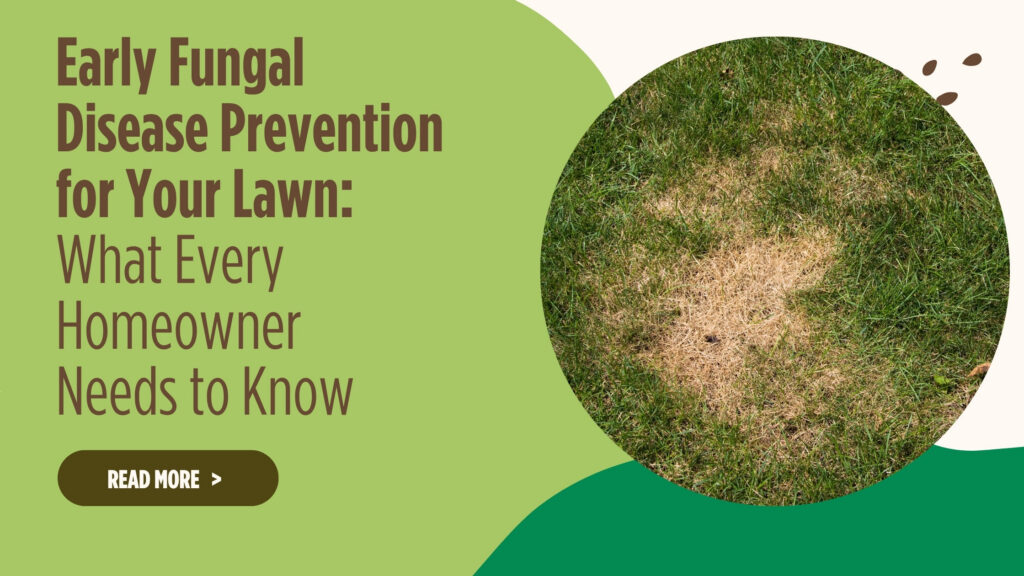
Infection symptoms often include patches of discoloration and thinning turf.
Recognizing these warning signs early allows for quick action to prevent widespread damage.
Common fungal infection symptoms include:
- Circular brown or yellow patches in turfgrass
- Powdery or fuzzy growth on grass blades
- Grass that appears water-soaked or slimy
- Leaf spots or irregular discoloration
In the Mid-Atlantic’s humid climate, conditions often favor problems such as brown patch or dollar spot. These issues frequently spread outward in circular patterns, which helps distinguish them from drought stress or insect damage.
Integrated pest management (IPM) strengthens long-term lawn health.
IPM provides a balanced strategy for early fungal disease prevention. Instead of relying solely on chemical treatments, it combines cultural lawn care practices that strengthen turfgrass and reduce disease pressure.
Healthy lawns resist fungal infection more effectively than reactive treatments alone. IPM strategies often include:
- Maintaining proper mowing height
- Watering lawns early in the morning
- Aerating compacted soil
- Monitoring turf for fungal infection symptoms
- Applying treatments only when needed
This proactive approach supports long-term lawn health while reducing unnecessary chemical use.
Robust plant health care practices improve turf resistance to disease.
Healthy roots and balanced nutrients help turfgrass defend itself against infection.
A proactive plant health care program supports early fungal disease prevention through two key practices:
- Balanced nutrient management supports turf strength.
Fertilization programs should match the needs of the soil and grass species. Excess nitrogen can encourage rapid leaf growth that becomes more vulnerable to infection. Soil testing helps determine the proper nutrient balance for healthy turfgrass development. - Soil aeration improves drainage and root development.
Compacted soil restricts oxygen flow and traps moisture near the surface, creating favorable conditions for pathogens. Aeration loosens compacted soil, improves drainage, and allows roots to grow deeper and stronger.
This approach improves overall turf resilience while reducing the environmental conditions that allow fungal problems to spread.
Biodiversity and turf rotation strategies can help improve lawn resilience.
While crop rotation is commonly used in agriculture, a similar concept can benefit residential lawns. Introducing different grass varieties through overseeding can help reduce the buildup of disease-prone turf.
These practices support healthier lawns in several ways:
- Managing soil-borne disease pressure
Certain fungal pathogens target specific grass varieties. Overseeding with more resilient turf types can interrupt disease cycles and reduce long-term infection risk. - Strengthening turf biodiversity
Lawns with a mix of grass species often tolerate environmental stress better than single-species lawns. Greater biodiversity helps stabilize the lawn ecosystem and supports stronger overall plant health.
Together, these strategies support long-term early fungal disease prevention and heartier landscapes.
Biological fungicides can be a useful preventative tool in plant health care programs.
These products contain beneficial microorganisms that compete with harmful fungi in the soil.
Rather than directly killing pathogens, biological treatments help create conditions where disease-causing organisms struggle to establish. Applications are typically timed before extended humidity or rainfall, when fungal activity increases.
When used alongside integrated pest management practices, these treatments can support a more sustainable approach to lawn disease prevention.
Frequently Asked Questions
1. What is early fungal disease prevention in lawns?
Early fungal disease prevention involves managing lawn conditions to stop fungal pathogens from developing. Proper watering, soil aeration, balanced fertilization, and monitoring for fungal infection symptoms all help reduce disease risk.
2. When are lawn fungal diseases most common?
Lawn fungal diseases are most common during warm, humid periods from late spring through early fall. Moisture that remains on grass overnight significantly increases the risk of infection.
3. Can watering habits affect fungal growth?
Yes. Watering too frequently or late in the evening can leave grass blades wet overnight. Morning watering allows turf to dry during the day and helps reduce fungal growth.
4. Are biological fungicides safe for residential lawns?
Biological fungicides use beneficial microorganisms to suppress harmful pathogens. Many homeowners prefer them because they support sustainable plant health care and reduce reliance on traditional chemical treatments.
5. How can homeowners strengthen plant health care in their lawns?
Improving plant health care involves maintaining healthy soil, aerating compacted turf, applying balanced fertilizers, and choosing resilient grass varieties. These steps help lawns resist environmental stress and fungal disease.
Hillside Lawn Care focuses on proactive plant health care strategies designed to strengthen grass and prevent common lawn diseases. Our experienced professionals monitor seasonal conditions, identify early fungal infection symptoms, and apply preventative treatments to keep lawns healthy throughout the growing season.
Concerned about lawn disease or noticing early signs of turf stress? HillSide’s lawn care professionals can assess your grass and recommend preventative solutions that support long-term health. Contact us today at 410.399.2207 or Hillsidelawn.com to schedule your free evaluation.
About HillSide Lawn Service: Since 1994, HillSide Lawn Service has offered expert lawn care, including aeration and overseeding and tree and shrub care. With a focus on sustainable, science-based methods and personalized service, HillSide is the trusted source for creating green, healthy lawns throughout Maryland, Delaware and parts of Pennsylvania. For more information or to request a free estimate, visit www.hillsidelawn.com or call 410-399-2207.